
Monday, November 7, 2022
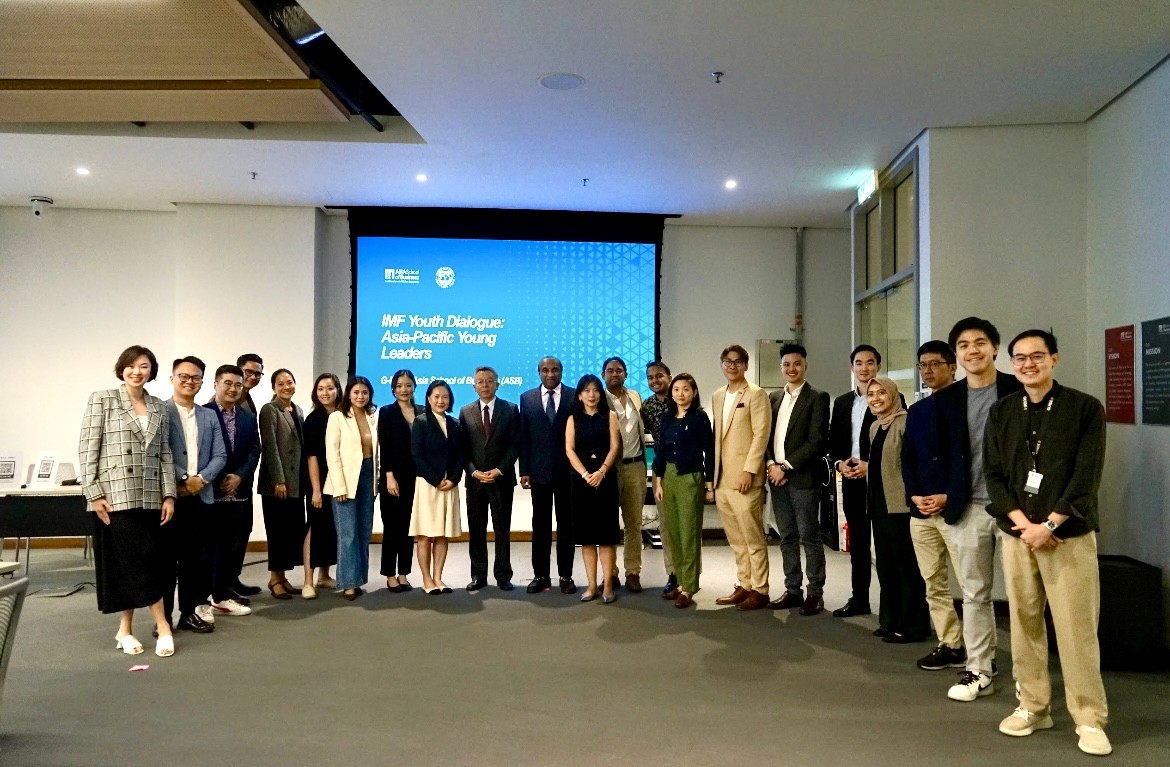
Speaking at the IMF Asia-Pacific Youth Dialogue on AI, Labour Markets & Economic Transformation
Honoured to have spoken at the International Monetary Fund (IMF) Asia-Pacific Youth Dialogue at the Asia School of Business, discussing how technological change, job creation, financial inclusion, and workforce transformation are shaping the economic future of Asia.
A meaningful moment for me to represent the private sector, contributing to broader conversations on leadership, technology, and macroeconomics after spending the last decade building fintech businesses globally.
One of the perspectives I shared was how AI is creating growing polarisation across labour markets, disproportionately amplifying top performers while compressing teams and widening the gap between AI-enabled talent and the broader workforce.
Today, a strong marketer, developer, or strategist equipped with AI can outperform entire teams, fundamentally reshaping productivity, wage structures, and how value is created within organisations.
The challenge is no longer simply talent supply, but firm adoption. Many economies are producing skilled talent, yet businesses and SMEs still struggle to hire due to capital constraints, weak digital infrastructure, and leadership capability gaps.
The immediate responsibility for governments, policymakers, and the private sector is managing workforce displacement before it evolves into a structural economic issue.
A recurring theme throughout the dialogue was that economic resilience cannot be solved in silos. Workforce transformation at scale requires stronger public-private coordination, policy alignment, and active participation across governments, institutions like the IMF, academia, employers, and the private sector to ensure AI strengthens productivity without weakening employability and long-term economic participation.
I also reflected on lessons from my time at BigPay, where we learned quickly that market realities often differ from boardroom assumptions. While the ambition initially centred around travel and FX, the real demand was financial accessibility - affordable payments infrastructure and accessible financial products for underserved communities.
Initiatives such as ePemula with Malaysia’s Ministry of Finance (MOF) in 2022 demonstrated what becomes possible when governments and the private sector move in alignment.
More than 2 million youths were onboarded into the digital financial ecosystem - mirroring the very conversations we are having today around tackling economic and workforce challenges collectively as an ecosystem.
As AI reshapes industries, labour markets, and hiring dynamics, the challenge is no longer technological adoption alone, it is whether economies can adapt fast enough to avoid creating structurally unemployable workforces at scale.
I walked away encouraged knowing that even in the age of AI, the most valuable traits such as curiosity, resilience, adaptability, and critical thinking remain profoundly human.
Thank you to Asia School of Business for the invitation, and to fellow speakers across the region for such an engaging and thought-provoking dialogue.